Prideaux Place: From Monastic Estate to Elizabethan Masterpiece
High above the harbour of Padstow, overlooking the Camel Estuary and the ancient deer park beyond, stands one of Cornwall’s most remarkable historic houses: Prideaux Place.
Today it appears to be a quintessential Elizabethan mansion, but its story begins much earlier — with a monastery, a royal upheaval, and one of the most dramatic periods in English history: the Reformation.
From Bodmin Priory to the Prideaux Family
Before Prideaux Place existed, the lands around Padstow belonged to Bodmin Priory. For centuries, the monks controlled the manor of Padstow, managing the land, collecting rents, and overseeing one of the most important settlements on the north Cornish coast.
However, during the reign of Henry VIII, England was transformed by the Reformation. The king’s break with Rome led to the Dissolution of the Monasteries, when religious houses across the country were closed and their lands transferred to the Crown.
The last Prior of Bodmin, Thomas Mundy, appears to have anticipated what was coming. Before Bodmin Priory surrendered to the Crown in 1539, arrangements were made to secure the future of some of the priory’s possessions. The manor of Padstow was granted on a long lease to his niece, Johanna Mundy, and her husband, William Prideaux of Trevose.
This marriage brought the Prideaux family into the story of Padstow.
A Fortunate Opportunity During a Time of Change
The Prideaux family were already an influential Cornish family with ancient roots stretching back many generations. Through careful marriages, legal knowledge, and connections with powerful figures, they were well placed to benefit from the opportunities created by the Dissolution.
The original lease was later converted into full ownership of the estate. Nicholas Prideaux, a prominent lawyer, secured the freehold of the Padstow estate after a complex series of transactions following the dissolution of Bodmin Priory.
For the Prideaux family, this was a remarkable transformation: land that had once belonged to a medieval religious institution became the foundation of a private family estate that would survive for more than four centuries.
Sir Nicholas Prideaux and the Creation of an Elizabethan Mansion
The man who truly transformed the estate was Sir Nicholas Prideaux (1550–1627).
A successful lawyer, politician, and member of Cornwall’s gentry, Nicholas Prideaux inherited the Padstow estate and decided that it needed a house worthy of his family’s growing status.
Around 1592, he began building the magnificent mansion that we recognise today.
The project was no small undertaking. Building a grand Elizabethan house required huge resources: stone quarried locally, skilled craftsmen, carpenters, plasterers, masons, and countless labourers. Over several decades, Nicholas Prideaux carefully created a home that reflected both his wealth and his ambition.
Forty Years of Building and Improvement
Although the house is often described simply as being “built in 1592”, the reality is that creating a great country house was a gradual process. Sir Nicholas Prideaux spent much of his life developing the estate, refining the house, and establishing Prideaux Place as the seat of his family.
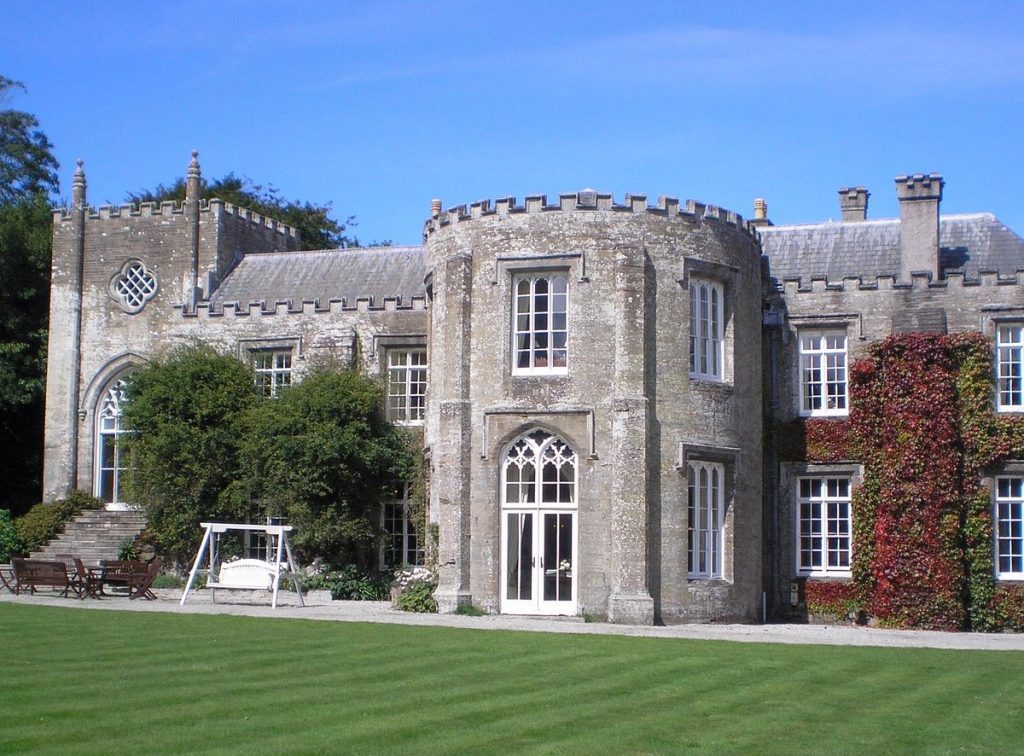
The finished mansion was a classic example of Elizabethan architecture, with the distinctive E-shaped plan popular during the reign of Queen Elizabeth I. Large windows displayed the wealth of the occupants, while the impressive Great Chamber demonstrated the family’s importance and hospitality.
This was not merely a comfortable home — it was a statement.
The Prideaux family had arrived in Padstow, and they intended everyone to know it.
A House That Continued to Evolve
Although Sir Nicholas created the foundations of Prideaux Place, later generations continued to leave their mark.
In the eighteenth century, Edmund Prideaux introduced new influences after his travels, bringing fashionable ideas from Europe into the house and gardens. Later, Reverend Charles Prideaux-Brune added the distinctive Gothic character that gives the house much of its unusual charm today.
The result is a fascinating mixture:
-
an Elizabethan mansion at its heart
-
eighteenth-century improvements inspired by European taste
-
nineteenth-century Gothic additions
-
centuries of family possessions and stories
It is not a frozen museum piece — it remains a living family home.
The Ghosts of Prideaux Place
For those joining The Ghost Walk Padstow, however, the story of Prideaux Place does not end with the laying of the final stone.
Behind the grandeur of the Elizabethan mansion lies a much more personal tale — one of family, tragedy, and a legend that has survived for centuries.
Sir Nicholas Prideaux’s eldest son, Humphrey Prideaux, was born into a world of wealth, influence, and expectation. In 1600, he married Honor Fortescue, the daughter of the influential Fortescue family of Devon. Their marriage united two powerful West Country families at a time when Cornwall’s great houses were competing for status, land, and influence.
It was during this period that the newly completed Prideaux Place stood as a symbol of the family’s ambition — a magnificent Elizabethan home looking down over the ancient port of Padstow. Within those walls lived generations of Prideaux family members, surrounded by wealth, politics, family rivalries, and the pressures of life among Cornwall’s landed gentry.
But every old house has its shadows.
According to local tradition, Honor Fortescue’s life ended in tragedy. The story tells that she fell — or in some versions threw herself — from the great staircase at Prideaux Place. Her ghost is said to remain within the house, forever known as “The Green Lady”, a mysterious figure whose presence has become one of Cornwall’s most enduring historic house legends.
It is this darker chapter of Prideaux Place’s history that features on The Ghost Walk Padstow. As we wander through the ancient streets beneath the shadow of the mansion, we uncover not only the stories of merchants, sailors, and smugglers, but also the tales of the families who shaped Padstow — and the spirits who may never have truly left.
Because at Prideaux Place, history is not simply something written in books.
Some say it still walks the corridors.
Prideaux Place: A Survivor of Cornwall’s History
From medieval monks to Tudor ambition, from religious upheaval to generations of Prideaux family life, Prideaux Place tells the story of Cornwall itself.
Standing above Padstow today, it is easy to forget that this peaceful house began with a moment of enormous national change. The Reformation reshaped England, and from that upheaval emerged one of Cornwall’s greatest historic houses.
The next time you look up from Padstow harbour towards the hill above the town, remember that behind those walls lies almost 500 years of ambition, politics, family drama, and survival.
A mansion built not just from stone — but from history.